
SERVICES / Fitness-for-Service
Fitness-for-Service for gas and hydrogen pipelines.
We calculate whether gas pipelines, hydrogen pipelines and other pressure equipment can operate under the agreed conditions. We use API 579-1/ASME FFS-1 and relevant DNV standards and recommended practices as a basis for continued operation, repair or replacement.
API 579-1 / ASME FFS-1 / ENGINEERING
DELIVERABLES
What you receive from Solutn.
- An FFS report with standards, method and assumptions.
- A description of the component, operating conditions and assessed damage.
- Documentation of the inspection and material data used, including relevant hydrogen data.
- Results for remaining strength or the significance of the flaw for the agreed service.
- Relevant operating limits and requirements for further data or follow-up.
How we get started.
Send us the material you already have. We review the basis and agree on scope, documentation and schedule.
View the relevant information and files
- Drawings, dimensions and original design and calculation documentation.
- Material and weld data, including relevant mechanical properties. For hydrogen: fracture toughness and crack-growth data for the actual hydrogen environment.
- Inspection reports, thickness measurements and any NDT results.
- Pressure, temperatures, load cycles, gas and hydrogen composition, and available operating history.
- A description of the damage and intended future service.
The assessment level, method and deliverables are agreed according to the damage type and available data. Material data from natural gas service may need to be supplemented for hydrogen. A remaining-life assessment requires documentation of damage progression and future loads. Decisions and follow-up are coordinated with the asset owner and relevant parties.
TYPICAL TASKS
Assessing damage and operating conditions together.
Corrosion, crack-like flaws or changed operating conditions can call for a new assessment. Solutn combines inspection data, geometry and materials with pressure, temperature and loads. We clarify what the calculation can establish and what information is missing before assessing the agreed service.
Corrosion in gas pipelines
Calculation of remaining strength for general or local metal loss. Thickness measurements, damage extent and relevant loads are assessed using the selected API/ASME or DNV method.
Crack-like flaws and welds
Assessment of flaw geometry, fracture and crack growth based on component materials and loads. DNV-RP-F108 may be applied to relevant flaws in pipeline and riser girth welds.
Hydrogen pipelines and blends
Assessment using material data that account for hydrogen’s effect on fracture toughness and crack growth. Hydrogen fraction, pressure, temperature and load cycles form part of the basis.
Changed service and requalification
Calculations for changes in pressure, temperature or fluid, including conversion from natural gas to hydrogen. FFS is included where needed in the overall assessment of the piping system’s new service.
Calculations and finite element analysis
Analytical assessments and, where required, a more detailed component assessment using finite element analysis.
Documentation and follow-up
A report covering the data basis, assessment, limitations and necessary next technical steps.
CALCULATION EXAMPLES
Gas and hydrogen pipelines in practice.
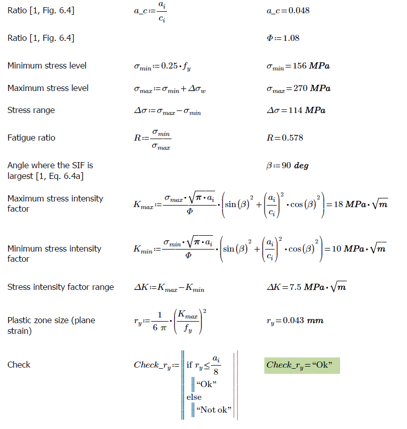
Two typical tasks show what an FFS calculation can include. The method and deliverables are agreed to suit the specific piping system and available data.
Gas pipeline with local metal loss
An inspection reveals corrosion and reduced wall thickness in a gas pipeline. The pipe needs to be assessed for the intended operating pressure.
View contribution, deliverables and basis
Solutn’s contribution We compare thickness measurements and the extent of damage with the pipe geometry, material, pressure and temperature. We calculate remaining strength using the relevant FFS method and apply DNV-RP-F101 where the damage and loads fall within its scope.
Possible deliverable A calculation report assessing the agreed operating conditions, relevant operating limits and inputs to a decision on continued operation, repair or replacement. Remaining life requires a documented basis for future damage progression.
Basis API 579-1/ASME FFS-1, DNV-RP-F101 where relevant, and the piping system’s original design basis.
Hydrogen pipelines and conversion to hydrogen
A piping system needs to be assessed for hydrogen or a hydrogen blend, or an inspection has identified a crack-like flaw in a hydrogen pipeline.
View contribution, deliverables and basis
Solutn’s contribution We review pipes, welds, flaw geometry, hydrogen fraction, pressure, temperature and load cycles. The calculation accounts for hydrogen’s effects on fracture toughness and crack growth using material data relevant to the specific hydrogen environment.
Possible deliverable A technical decision basis assessing the agreed operating conditions, data requirements and any need for material testing. For conversion projects, FFS forms part of the overall assessment and requalification of the piping system.
Basis API 579-1/ASME FFS-1 and relevant parts of DNV-RP-F123, edition 2026-03. DNV-RP-F108 may apply to girth-weld flaws; DNV-ST-F101 applies where the task concerns a submarine pipeline designed to that standard.
STANDARDS AND ASSESSMENT BASIS
A clear basis for the assessment.
API 579-1/ASME FFS-1 is a joint standard. We combine it with the relevant DNV standards and recommended practices according to the task’s scope. The piping system’s design basis, damage type and fluid determine which methods can be used.
| Standards and assessment basis | Application to the task |
|---|---|
| API 579-1/ASME FFS-1 | The joint API/ASME standard for Fitness-for-Service assessment of existing pressure equipment. The method and assessment level are selected according to the component and damage. |
| DNV-RP-F101 · Corroded pipelines | Assessment of pipeline corrosion under the covered pressure and load conditions. Edition 2019-09, amended 2025-09. |
| DNV-RP-F108 · Flaws in pipeline and riser girth welds | Assessment of flaws, fracture and fatigue in pipeline and riser girth welds. Edition 2019-09, amended 2021-09. |
| DNV-RP-F123 · Hydrogen pipeline systems | Hydrogen effects and structural integrity of C-Mn steel line pipe and associated welds, used with the relevant pipeline design basis. Edition 2026-03. |
| DNV-ST-F101 · Submarine pipeline systems | Design basis and structural integrity for submarine pipelines where this standard forms the project basis. Edition 2021-08, amended 2021-12. |
The DNV editions were checked on 6 October 2026. The edition, method and acceptance criteria are established for the project and documented in the report. DNV-RP-F123 addresses C-Mn steel line pipe and welds; criteria for bends, fittings and valves, for example, are clarified separately.
QUESTIONS
Before we get started.
What material should we send first?
Start with drawings, material data, operating conditions and the inspection report. For gas and hydrogen pipelines, fluid composition and load cycles are also relevant. We review the material and clarify the next required inputs.
Can FFS support a decision on continued operation?
The assessment can inform the asset owner’s decision about the specific service and its conditions. The conclusion is tied to documented data, the method and the agreed assessment scope.
How do you assess pipelines for hydrogen?
We clarify the hydrogen environment, materials, welds and loads. Hydrogen’s effects on fracture toughness and crack growth are accounted for using relevant data. DNV-RP-F123 is applied within its scope and alongside the selected piping-system design basis.
CONTACT
What needs to be calculated or designed?
Send a short description, a drawing or a photo. Tell us what you want to modify or assess and when you need the deliverable. We will clarify the technical basis and next steps.
You are also welcome to call if the scope is still taking shape.
Jon Svenninggaard
Director · Solutn ApS
Opens your email application. You can attach drawings and images.
Vågøvej 16
8700 Horsens · Denmark